Thursday, April 9, 2015

Signs of Fire


I looked to the stars, tried all of the bars.
An' I've nearly gone up in smoke.
Now my hand's on the wheel of something that's real,
An' I feel like I'm goin' home.

         - Will Callery 


           One Sunday last spring, Twin Creeks Hall in Volente held a fundraiser for a worthy cause -- a decent sound system. Twin Creeks is sort of an old-time Texas roadhouse; it looks and feels like a gathering place from another era.   Like the 20th century.   I don’t know what the old sound system was like, but judging from the looks of things that day, I had no problem imagining that it was time for a new one.  They had recruited some great bands and songwriters to grace the indoor stage for a full day and evening of music.   Outside in the sunlit beer garden which is bordered by the creek on one side and the farm-to-market on the other, there were a couple of microphones set up for an open mic to entertain people between the main acts indoors.

          I was there with my friends and fellow songwriters, Adam Belsky and Mike Eastman.  All three of us were fairly recent converts to songwriting.  We had met sometime in the previous six months at the Austin Songwriters’ Group weekly song critique sessions.  Song Doctor.  Song Doctor is a test of courage for songwriters.  Don't take my word for it.  Ask anyone who's ever laid their new song -- which I guarantee you they love like an infant -- out on the table for evaluation and critique.  Adam, Mike, and I went to song doctor every week and put our songs up for "honest feedback."  We regularly compared wounds and encouraged each other to keep on keeping on.  The upshot was that although we hadn't known each other long, it already felt like our friendships were forged in fire.   

         It was an irresistible day so most of the time there were actually more people outside around the open mic “stage” than inside.  Too big an audience for me.  I thought.   I shook my head when Adam pointed to the white board by the door for people who wanted to sign up for the open mic.  He wasn’t daunted by my cowardice, though.  He picked up the marker and wrote his name on the list.  Apparently peer pressure and fear of missing out are stronger forces in my psyche than terror so I only made it about 15 minutes before I succumbed and signed up right underneath Adam.  Mike scrawled his name a couple slots below mine. 

           The fear that goes with performing is curious.  Writing the songs is one thing; performing them is another.  Especially when you’re not used to it.  You know that singing a song in front of people over a microphone won’t kill you, but your body responds as though there is immediate physical danger, as though you’re going into battle or walking into flames.   The kind of dread that makes you tremble.   At least that’s how it is for me.  Mike and Adam and I took our pre-combat jitters down to the creek where we sat in dappled sunlight with our guitars, between the sweet sound of the running creek and the humming engines on the highway, and took turns singing songs we planned to play.  I guess it’s true that life never seems quite as sweet as it does when you think you’re about to die.  That moment with Adam and Mike on the fringe between nature and civilization sits in my mind as one of those jewels of memory that compensates for moments when life is mundane or brutal. 

          Seems funny to me that the rehearsing is so memorable.  The performance itself is a blur.  Before I knew it, Adam was playing and I was up next, singing out, focusing on Mike and Adam standing near by watching me closely as though they would catch me if I fell.  And then I was done.   Three songs behind me and not a wound anywhere on my body.  Still alive.  Sun still shining.  People smiling at me.  Some of them patting me on the back.  The next open-mic performer shaking off the jitters and taking the stage.

          Me, I was already relaxing.  Talking at a picnic table out in the beer garden, going inside to hear my friend Lisa Fancher play with Clyde, smiling, laughing, enjoying the day.  Everyone was talking about Dr. Danger, a sort of performance artist/ stunt man/ professional pyromaniac who was planning to set himself on fire at sundown.  And his girlfriend, Mighty Aprhrodite.  I didn’t quite get the details, and what details I did get I couldn’t quite process.  I was a little high from all the adrenalin being drained out of my body.  The buzz about Dr. Danger was just part of the rumble and roar that filled the air.  Everyone was happy.  I felt like I was back in old Austin.  Back when it really did seem remarkable that the country music of my parents’ generation -- music that was born and raised in honky tonks and road houses like Twin Creeks Hall -- was synching in perfect harmony to the music of my generation.  And we were all in cahoots to defy genre and discount the barriers that might seem to separate us.

Austin 1973.


         The sun had just gone down when Mike took the open mic stage at Twin Creeks Hall.  Unfortunately, that was the time Dr. Danger had set for pyrotechnics.  I wish I could describe that event for you, but I can’t because I didn’t see it.  When the first flames shot up over the fence that blocked my view of Dr. Danger and Mighty Aphrodite, who staged their performance in the parking lot, I instinctively turned with everyone else to run outside and watch, but I noticed immediately that Adam stayed where he was – in front of the stage, feet rooted to the ground, watching Mike play his first song.  I looked back at Adam.  I can't say that the look he gave me was judgmental but it didn’t have to be.  His rootedness in front of our friend who, remember, was playing at his first open mic ever was judgment enough.   Adam knew where he belonged.  I slowed my steps and – I have to admit, reluctantly – came back to stand next to Adam to watch Mike's heroic performance.  Mike paused for a moment after his first song to smile quizzically at the flames shooting up higher and higher over the fence and then forged on.  Of the 75 to 100 people who were at Twin Creeks Hall at that moment, Adam and I were the only ones watching Mike.  Everyone else had rushed into the parking lot or were standing on benches and tables to look over the fence.  From what I understand, Dr. Danger did set himself and his girlfriend on fire – they were under the flames I could see over the fence -- but because they were wearing some effective flame retardant gear, they didn’t go up in smoke.  The whole thing only lasted about as long as Mike’s three songs.  Which Adam loyally watched.  I’ve already admitted my vulnerability to peer pressure and my instinct to leave Mike the moment the fire started so I can’t get away with claiming instinctive loyalty myself.  I was just doing what Adam did.  I’ll claim it as a learning moment though.  It was a great exercise in resisting the lure of spectacle – like stunt immolation – to keep my "hands on the wheel of something that’s real.”  Thank goodness because I don't have any regrets about missing Dr. Danger's and Mighty Aphrodite's performance but I would have some if I'd missed Mike's.
         Mike posted on Facebook the next day that he had played his first open mic the night before and that only two people had set themselves on fire.    He’s a card. 
         We stayed for the rest of the show.  Talk about relaxed.  By then we were all three as high as a mother who’s just survived labor and has a cooing baby to show for it.  Bob Cheever, Chris Wall, and Will Callery.all three put on a great show which was just more icing on an already perfect cake.  Truth is, though, Mike, Adam, and I would've had a good time kicking cans in a junkyard at that point. 

         As we walked to the car at the end of it all, Adam asked me if I was glad I had played.  I said I was.  Of course.  In fact I was bursting with pride.  On top of everything else Chris Wall and Will Callery and Bob Cheever had all told me I sounded great.  Then Adam said, “You know there were two kinds of people here today.  Those who played songs, and those who didn’t.  You were one of the ones who played songs.”

        Sometimes I make the mistake of thinking about the shortfall in life -- feeling guilty that I didn’t start writing songs earlier, that I’m not as good as someone else, that I’m not young, that I’m slow, that I can’t play the guitar better, that I can't hit the high notes, that I'm only playing in an open mic, that I’m not famous or even almost famous.  The list can go on and on, but on the drive home Adam said something else that sticks with me.  He said we were lucky that we weren't already successful as songwriters.   He said, if we were successful or famous or even just recognized, we wouldn’t be getting to try for that now.  We wouldn’t get to have the day we’d just had at Twin Creeks Hall.  Sure, Bob Cheevers, Chris Wall, and Will Callery had had a good day, but was it as good as ours had been?  Who would be willing to trade anything for the day we'd just had? 

          It’s now over a year later, and Twin Creeks Hall's fundraiser seems to have been the kick off of a new chapter in my life.  I seem to have survived what was a very rough patch for me and to have emerged into a day that is full of music and sunlight and friends who stand close when I’m most afraid of going up in smoke.   

          It's been a year full of songs and circles and growing in new directions.   At the end of it all I'm mixed up in a community of musicians and collaborators who seem to be the very pulse of creativity.     One of the things that’s come to pass is that Adam and I are launching a new open mic of our own.   At Tom’s Tabooley.  We begin this coming Thursday night and have high hopes for creating an open mic that is as supportive to songwriters and performers as that open mic at Twin Creeks Hall was to us last spring. 


         I gotta say Tom’s is a kick-ass venue with a great stage.  AND it already has a fantastic new sound system.  No fundraiser necessary.   We do not plan to include baptism by fire or pyrotechnics of any kind in the show, but we do hope to create an event that will give novice and veteran performers and songwriters the chance to come play and listen to each other without anyone going up in smoke.  
 
     Sign up is at 6:30.  We start at 7 and go until 10.

Tom's Tabooley
(512) 479-7337
2928 Guadalupe St
Austin, TX 78705


Thursday, November 1, 2012

Signs of Another Time


“. . . go forth in love and peace — be kind to dogs — and vote Democratic"
Guess who said that.

The first year of my brief first marriage was also the year of the first Presidential election I was able to vote in.  1972.  Nixon had one term under his belt.   Muskie, McCarthy, and McGovern were struggling for the democratic nomination against each other and more importantly against George Wallace, an unrepentant racist who might as well have had horns growing out of his forehead as far as I was concerned.  I was still a teenager, but old enough to get married and -- since the voting age had been lowered to 18 the previous year -- old enough to vote.

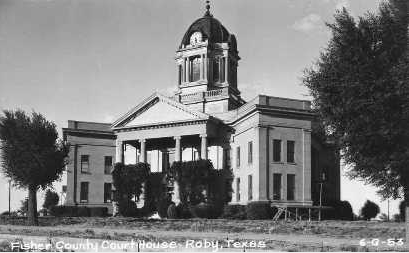
Stuart had left his job at Lockheed in Los Angeles the year before to come home and farm with his father.  When we got married in December of 1971, I quit school half-way through my sophomore year in college to move from Austin (which had recently given birth to weird) to Roby (which was then and still is in a dry – and I don’t mean arid -- county smack dab in the philosophical heart of the Bible belt).  We moved into the first house Stuart had ever lived in – a two-bedroom, stucco, shotgun house five miles east of town; a hundred yards from Stuart’s grandparents’ larger, lovelier home; half a mile from his parents; a stone’s throw from the massive barn which was no longer used for anything except storing defunct tools and some hay.  Our house, like the barn, suffered from neglect, having stood empty on the wind-blown plains for over a decade.  In spite of that Stuart was tickled to be home, shed of the defense industry job that had got him a draft deferment.  And I was naïvely happy to accept things, like what house I lived in or the political habits of my new in-laws, without question.  The house faced south toward the highway which hurled whining semi-trucks and speeding cars past us on a straight shot from Fort Worth to Hobbs, New Mexico.  Behind us was a field planted in cotton, cradled on two sides by the Clear Fork of the Brazos.

Inside the house, Stuart and I were cracking open the lid on Pandora’s box.  This isn’t a story about addiction or misspent youth or the many troubles we let loose in our lives way back when, though.  It’s about politics.

We couldn’t go on a honeymoon after the wedding because the cotton hadn’t been harvested yet.  Back then you couldn’t harvest cotton until after the first freeze had killed the plants, and there had not been a freeze in the fall of 1971.  The first freeze of the winter came in January launching every farmer in the county into the hardest job in the cotton-farming cycle – stripping.   Stuart and the hired hand spent painfully cold days, working their way through acres of cotton, taking turns driving the stripper or standing in the trailer behind to stomp the cotton down into the trailer bed before the howling wind blew it away.  It was a bitter piece of physical labor.  But that’s the way it was done.  Then.  In 1972 there were not even any air-conditioned tractors in Fisher County.   Everyone plowed in an open-air tractor and harvested in an open-air stripper without even the benefit of radios.   Sometime in 1973, Stuart got wind of a new tractor on the market, a John Deere with an enclosed, air-conditioned and heated cab.  He immediately began lobbying for one.  But his father, who was his partner and no longer spent anytime on a tractor himself, thought it was an unnecessary extravagance. 

Stuart’s father was an archetype right out of a Southern gothic novel – big, powerful, demanding, smart.  He had been a Senator in the state legislature and had run for Congress. He was also the Chairman of the Fisher County Democratic Party, a position he took seriously.  He believed that politics was a serious business.

Come primary day in the spring of 1972, everyone in Stuart’s family – mother, father, grandparents, sons, daughters, daughter-in-law – went to the courthouse for the precinct convention, which, as anyone who’s ever been to their precinct convention knows, did not warrant the name “convention.”  Maybe twenty people gathered in a conference room upstairs in the courthouse.  About half of them were my relatives so it wasn't exactly intimidating.


When the time arrived to declare which candidate you supported for the Democratic nomination, I came out in favor of McGovern.   I found out on the drive home that Stuart considered that an act of naivete.  He had remained undeclared -- I think others in his family did, too -- a move he thought improved his chance of being elected as a delegate to the state convention in San Antonio.  The way the Stuart explained it, if the Wallace supporters didn’t know who you actually did support they might think that you supported their candidate and vote for you as a delegate.  I doubt that anyone in Fisher County was that dumb.  Even the Wallace supporters.  It was no secret that Stuart’s family leaned to the left, and Stuart had a pony tail.  It didn’t really matter though.  No one else was interested in going to the convention so Stuart and his brother were unanimously elected as delegates just on the basis of announcing their availability. 


Although McGovern did ultimately get the nomination, I doubt it was because of the maneuverings of savvy supporters in the heartland.  But honestly, there was enough at stake with Wallace as a contender to make any effort to block him worthwhile.  And who knows?  So many trivial and important things were at play.  Muskie cried, for God’s sake.  Actually, I think his voice just cracked, but apparently that was enough to get you run out of town on a rail in 1972.  Someone shot Wallace a week after the precinct convention.  Funny to think that both those events had the same impact on the candidacy of those two men.

Everyone in Stuart’s family was pleased with McGovern’s nomination.  I was, too.  McGovern was against the war which was the issue I cared about.  The war, the draft, and the atrocities of war that we glimpsed every night on the 6 o’clock news.  Those were the things I cared about. 

I’d never heard of Agent Orange in 1972 so I didn’t know to care about that.  I wouldn’t hear about Operation Ranchhand and the chemical defoliant U.S. troops were using in Vietnam for tactical purposes until long after the war was over.  I remember now, though, that the hottest topic of conversation at the Fisher County Farmers Union meeting in the summer of 1972 was the new product the Treflan salesman was peddling – a defoliant that worked.  The conversation only penetrated the periphery of my consciousness.  I didn’t want to be at the Farmer’s Union meeting, but, like the precinct convention, skipping it did not appear to be an option in Stuart's family.  I had no interest in or opinion about any topic of conversation at the meeting including defoliants or anything else to do with the farm.  I knew more about what was going on in Vietnam than I knew about the farm.  But I find it interesting now to look back and realize that by the mid-70s none of the farmers in Fisher County had to wait for the first freeze to strip cotton.  Sometime around 1972 they started using defoliants which meant that the cotton could be harvested in the fall. By that time the defoliant they were using had been field test thoroughly in Vietnam.

Stuart didn’t strip cotton in the fall of ‘72, though.  He and I had moved back to Austin that September so that he could begin law school and I could pick up my undergraduate education right where I had left off -- studying too little, barely squeaking by academically, partying too much.  We went to hear music a couple of times a week.  We saw movies constantly.  I had lunch every day in the Chuckwagon, a cafeteria style restaurant on the ground floor of the Student Union; I would often miss classes to sit in the Chuckwagon all afternoon talking about politics or books or time travel with other students who fancied themselves students of life and could argue passionately that institutional structures and strictures (like classrooms and classes scheduled at particular times) actually interfered with real learning.  Sometimes I would tell people that I went to the University of Chuckwagon which I thought was a pretty funny joke.  I loved the Union – smoked cigarettes and read in the corridor upstairs, listened to music at Potpouri which is now the Cactus Café, and went to all the lectures.  That’s how I saw Linda Jenness, the Socialist Workers’ Party candidate for President, speak.  I left that lecture all fired up, feeling elated that finally a candidate had articulated my thoughts and values, clearly and unequivocally. 

McGovern had slipped in my estimation.   I still feel a little upset when I think of Thomas Eagleton.  The fact that McGovern dumped him as a running mate when it came out that Eagleton had had electroshock therapy seemed to me like an unforgiveable act of disloyalty and cowardice.  Truth is, the Eagleton debacle sat so wrong with me, that years later when Gary Hart tried a Presidential run, I wouldn’t consider supporting him simply because he had been McGovern’s campaign manager.  Needless to say, I was not feeling enthusiastic about McGovern in the fall of 1972.  On top of his disloyalty to Eagleton, in every campaign ad McGovern sounded like he was apologizing for opposing the war.  And the closer we got to election day the more apologetic he sounded.  I couldn’t understand why he didn’t just hammer the points adamantly – the war is wrong; the draft is wrong; I will end the war, bring our troops home, and offer amnesty to those who left the country to avoid the draft.  I couldn’t see what was hard about that.  I was that young.  


I’d never heard of absentee voting, but that was the rule in Stuart's family, not the exception.  That way if you died before election day, your vote would still count.  Since I did not doubt the family wisdom, I was a willing soldier in their army.  When the general said, “Vote absentee,” I voted absentee.  But when I cast my early ballot, I voted my conscience and instead of voting for George McGovern I voted for the candidate I thought would do the best job – Linda Jenness.

I didn’t tell Stuart.  I didn’t tell anybody that I had voted for the Socialist Workers’ Party candidate.  Didn’t seem necessary for one thing.  For another, it was my business who I voted for.

On the weekend before election day, Stuart and I went home to Roby and stayed over until Wednesday.  That seems odd now because Stuart was actually an excellent student and never cut classes.  Still that’s what we did – we went to Roby for the election.  As if it were Christmas or Thanksgiving.  On that Tuesday we didn’t go to the courthouse to vote because, of course, we had already voted, but when the polls closed we all – again, father, mother, grandparents, children –  went to the courthouse.  We weren’t the only ones.  The courthouse square was bustling with cars, and inside people were busy doing the work of citizens. The industrious and mature, like my Aunt Fi, were working, counting votes, posting the count on the big black board above us in the lobby. The rest of us, like me, were just hanging out, watching the numbers go up on the board.

That’s when things got tricky.  The first number to go up and the only count that never changed on the blackboard all night long was the tally on absentee votes. Turns out eight people had voted absentee in Fisher County that year.  When the votes were posted in big, neat numbers so that the old folks wouldn’t have to squint, it was revealed that seven of the absentee voters had voted for George McGovern.  One had voted for Linda Jenness. 

I hadn’t anticipated the blackboard and it didn’t occur to me when I cast my ballot that so few people voted absentee. 

Who?  I heard people ask around me.  Linda Who?  I have an image of Stuart’s father looking at the blackboard.  He knew, of course, as we all did, that all eight absentee votes had been cast by his family.  He’d distributed the ballots himself.  He also knew that anyone with a lick of sense in the room would know that all the votes in the absentee column were his family’s.  But he met the information on the blackboard with a poker face, and I never saw him look at the numbers in that column again. The younger generation of the family eyed each other and me cautiously. Trying to figure out which one of us had violated the family code of honor.  I sat there all night, with the good citizens of Fisher County, looking quizzically at Linda Jenness’s name on the board as if I wondered who she was, too.   I avoided making eye contact with Aunt Fi who had remarkable analytical skills and didn't appreciate many of the choices I was making that year to start with. 

I don’t remember hearing anyone explain who Linda Jenness was.  I didn’t hear anyone say “You’re kidding?”  or “Socialist what?  What party?”  or even “I’ll be damned.”   But as the evening wore on I realized that people were no longer asking the question. That’s how gossip works in Roby.  It’s what you don’t hear that you need to worry about.   The truth of what people think or say about you lies behind a mask of civility and layers of triangulation, and once public opinion starts building against you, you're up to your eyebrows before you know it.  Good mothers in Fisher County teach their children that lesson when they’re very young.  I didn’t make a conscious decision to be a chickenshit that night, but I didn’t step forward and save Stuart or anyone else in his family from being undeservedly labeled a socialist.  I’m sure it didn’t occur to me to worry about their reputations.  And to tell the truth I wasn’t worried about any of our reputations as much as I was worried about being discovered as the traitor in our voting block.  I was so consumed by that worry that I barely noticed that the opponent of any candidate I would support – Richard Nixon – won the election.

Oddly, Stuart’s parents never mentioned Linda Jenness after election night.  In my presence at least.  I imagined they must’ve puzzled over it in private.  But I was confident they had no idea which one of the younger generation was the outlier.  I wasn’t the only rebel in the bunch by a long shot. 

Sometime after the election, though, I had a conversation with Stuart’s father that probably gave him some satisfaction.  I told him in a moment when we were oddly alone that I thought you should vote for the best candidate, the candidate you believed would do the best job.  I said party affiliation didn’t matter.  Or if it did, it ran a distant second to the importance of the individual.  That seemed like a no-brainer to me and I was shocked to discover that Stuart’s father adamantly disagreed with me. He said that an individual doesn’t have enough power to get anything done.  The individual has to work within a party to have any strength, and the party is much more powerful than any one candidate.  If you want to change something, if you want to make things better, he advised me, work within the party.  Shape the party.  Make it see the issue you care about. Get the party to put its weight behind platforms and initiatives that reflect your beliefs.  The candidate comes later.  It’s hard to remember the specifics of things that long ago especially since I was probably high and trying to hide it, but I remember my imposing father-in-law giving me a piercing look and saying something along the lines of  “You think everyone deserves a fair shot.”  He had an expression on his face that suggested he was old and wise and would be amused at how young and naïve I was if it weren’t so tragic.  A look that made me suspect he knew I was voting for socialists.  As intimidating as he was, his arrogance made me mad and I came back with a defiant, “Yes, I do.”  He said, “I do, too.  That’s why I’m a Democrat.”

Yesterday I heard a report on the radio about why young people don’t vote.   In interviews, young non-voters said that they weren’t interested in the election, that they don’t know enough, that the candidates are all the same, that their vote doesn’t matter.  I felt sad listening to them and wished that I could give them a fraction of my own abundant emotion about the election.  To this day there is something about the Presidential election that inspires awe in me. The significance of what we all participate in – Republicans, Democrats, Libertarians, and Socialists alike – seems sacred and wonderful to me.  I always feel tears welling up when I vote.  It’s almost like having a hormone imbalance.   Four years ago around this time of year, as the likelihood of a miracle – that in my lifetime we could move from George Wallace as a possible candidate to Barack Obama as President -- loomed larger everyday, I began to feel like I was going to burst into tears all the time.


I look back on my first Presidential election and I think about how naïve we were.  And how that blinded us to things.  For instance, how is it that we bought defoliants hook, line, and sinker two years after the first Earth Day, a decade after Rachel Carson published Silent Spring?  And kept buying them after we found out about Agent Orange?  I think about the advice Benjamin Braddock got in The Graduate: “Plastics.”  We were savvy enough to know how clever that joke was, smart enough to see where we were headed.  But not smart enough to take another route.  Maybe we were lazy.  Or high.  Maybe none of us – even the hardworking and sober – could handle the complexity of everything.  But today I find myself being nostalgic and wishing farmers would have kept stripping cotton in open-air strippers after the first freeze. I realize that it's easy for me to wish that since I don't plant or plow or harvest anything.  But I can't help noticing that some progress has hurt more than it's helped.  I also wish I could take every young person who doesn’t vote and sit them down in the old county courthouse in Roby, Texas in 1972 to watch citizens of all stripes tally votes on a blackboard till way past bedtime.  Till all the votes were counted.   It’s hard to live through that and think it doesn’t matter.

It’s all about politics.  The semi-trucks on the highway, the cotton field behind the house, the Farmer’s Union meeting, racism, shock treatments, stripping cotton, skipping class.  All politics.  That’s why it’s a serious business.  That’s why little things -- like showing up at the precinct convention or paying attention to the conversation at the Farmers’ Union meeting or voting -- matter.  That's probably the most important thing I learned in 1972.  I imagine George McGovern and Thomas Eagleton and Linda Jenness all three would back me up on that.

“. . . go forth in love and peace — be kind to dogs — and vote Democratic"
Senator Thomas Eagleton’s dying wish


Tuesday, August 7, 2012

Sign of a Cat


Sign of a Cat 

I didn’t grow up around people who had a great affection for cats. In Roby, cats are half wild. And more coincidental (as in “He just wandered up one day”) or utilitarian (as in “Not much to look at, but, man, she’s a good mouser”) than companionable. Nobody in my family really held cats or played with them. “House cat” was a special term applied to the odd feline who got to come inside. Sometimes. No such thing as a cat who didn’t go outside at all. I never knew anyone who had a litter box until I was grown.


When I met JB he had a black and white cat named Babe.  After Paul Bunyan’s blue ox.  Though I recognized that JB was fond of Babe, I didn’t understand it in the same way I understood love for a dog.  To tell the truth – either because of my raising or some essential shortcoming in me -- I probably really didn’t even view cats as capable of a loving relationship.  Needless to say, I didn’t forge a bond with Babe myself.  I didn’t dislike her.  It just didn’t occur to me to interact with her.  Since she apparently felt the same about me our relationship was a non-issue. 

I lived with her for twelve years though.  She remained, throughout that time, JB’s cat.  He petted her, played with her, made fun of her, talked to her, teased her.  And when she disappeared, he mourned her in a way I’m ashamed to say I didn’t even grasp.  By that time, Nick was four or so and one of the division of duties JB and I had unconsciously adopted as young parents was this:  I was in charge of children; JB was in charge of pets.  We were both pretty happy with the division.  JB was devoted to our animals – two dogs – Pecos Bill and Thalia: Babe; a tank full of fish; occasional lizards or other wild animals foolish enough to be captured by a pre-schooler.  And JB seemed perfectly happy to basically nod and say uh-huh when I obsessed over Nick’s fine motor skills or signed us up for a parenting class. 

We lost Babe and both dogs in the span of a few months.  Thalia died of old age.   Pecos Bill, who had always been as wild as his namesake, went a little wilder when she died.  He got out of the yard one day, which was a common occurrence since escape was his on-going mission in life; only that day JB never tracked him down eating garbage or chasing squirrels a few blocks away, and Pecos Bill never came back of his own accord.  A month or so later, JB was driving his pick up to work and heard a cat meowing.  He stopped at the corner of Airport and Lamar, got out, and looked to see if Babe or another cat was stowed away in the bed of the pick up.  He didn’t find any sign of a cat so he scratched his head and went on to work.  We never saw Babe again, though.  JB went back to that intersection with flyers.  He walked that neighborhood and ours searching for Babe.   He was already going to the Town Lake Animal Shelter every week to look for Pecos Bill so he started touring the cat cages there, too.  He never found either one of them.  

We went a year with no warm-blooded pets until finally for Nick’s fifth birthday JB and I decided to surprise him with a dog. We ended up choosing a beautiful two-year-old female golden retriever named Bo.  On the way home to an unsuspecting Nick with Bo panting behind us in the backseat, JB turned to me, tears brimming his eyes, and said, “I feel as if a hole in my heart has been healed.”

When JB died two years later, one of the great, uncalculated tragedies was the loss the pets endured.  I never came close to filling his shoes.  I wasn’t even doing a good job with my designated responsibility -- the child.

Bo lived for another nine years and gave birth to a litter of puppies, one of whom Nick talked me into keeping in spite of the fact that I didn’t think we were taking good care of the animals we had.  Nick named the puppy Moon.  Short for Moonstone.  The other two pups in the litter he named Garnet and Sapphire, a sweet homage to JB who was a jeweler and collected gemstones.


Moon was a goofy, galumphing puppy when I started dating Kent.  There was something so hopeful about living with a puppy.  Moon’s cheerful optimism still seems to me all wrapped up with the great blessing of falling in love with Kent who healed a hole in all our hearts.  


A few years ago, when it seemed clear that Moon was nearing the end of his life, Kent and I started talking seriously about getting another pet.  Bo had died a few years earlier.   Neither of us wanted to be without a pet.  But we weren’t sure we were ready for another dog.  Yet. Kent was coming up for a sabbatical at the end of his term as Associate Dean and we wanted to take an extended trip tacked on to the study abroad course I was scheduled to teach in Spain.  Finally we decided on a lower-maintenance pet for the immediate future.  We’d get a cat. It would be easier to arrange care for a cat while we traveled.  Then we’d think about a dog when the sabbatical was over.

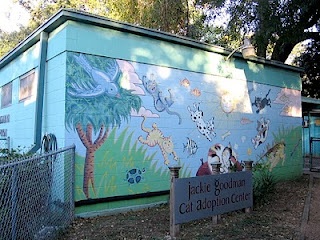
So that year when my birthday was about to roll around, I told the kids that what I wanted was a cat.  Unfortunately Lana and Emily, who, like JB, love animals as much as Tony Soprano does, were both in Boston so they couldn’t participate directly in the selection, but the rest of us -- Nick , Josh, Kent and I – all went together to the Town Lake Animal Shelter on the day before my birthday to pick out a kitten.   I didn’t tell anyone, but I really wanted a black and white kitten.  Like Babe.  I didn’t tell anyone because it seemed unfair to Kent for me to want a cat that looked like my dead husband’s cat. 

 Kent remembered meeting JB at a party at Debi and Lynn’s one New Year’s Eve.   JB was reading tarot cards for people.  I didn’t meet Kent at that party; I don’t remember meeting him until years later.  I don’t think he and JB could have exchanged more than a few words.  Still Kent thought of JB as a friend.  That’s the kind of guy Kent was.  He thought of people he liked as friends even if he’d only spent moments with them.  On top of that he wasn’t jealous.  So he never seemed to view JB as a rival.  On the other hand I think he suspected that I loved JB more than I loved him.  That that young love was truer.  Stronger.

When you divorce you put away the pictures of you and your ex.  Box up the sentimental souvenirs.  Get rid of the reminders of a love that didn’t work out.  It may take a while, but everyone pretty much agrees that that’s the right thing to do.  Make a clean break with the past.  With a death, it’s different.  You keep the pictures out so that your child will remember what his father looked like.  What it looked like to be held by someone whose touch is now forgotten.  What his mother and father looked like together.  And to remember that yourself.

After I married Kent, I used to dream that JB came back.  I would be so confused in the dream, kicking myself for having forgotten I was already married to someone when I married Kent.  I didn’t know what to do.  There was no taking back that I was married to Kent.  And I didn’t want to take it back.  But there was no taking back that I was married to JB, too, and that I didn’t want to take that back either.  It was agonizing.  There was no solution.  I couldn’t choose between them.  And the thought of rejecting either of them was impossible.  There was not even relief in waking, because the only pleasure of the dream – that JB was back – would be taken away.

Friends and family who came to the house and saw the pictures of JB in my study would sometimes comment on them.  Sort of warily as though even acknowledging their presence was tricky.  They’d ask if Kent minded.  Or they’d see the altar with JB’s boots beside it and say something about how tolerant Kent was.  But I couldn’t throw those things away as though that love hadn’t worked out.  As though the marriage had failed.  As though I was angry with JB and didn’t want to have reminders of him around.  Kent never mentioned the burden himself.  He never seemed uncomfortable with the memorabilia from another marriage.  He went with Nick and me to JB’s grave every year on the anniversary of JB’s death.  If he spoke of JB, he spoke as though they regarded each other fondly.  But still it caused me confusion, and I’m sure it did Kent, too.  And it was clear that to the world it seemed odd – maybe even disrespectful to Kent -- that I would keep JB present in my life.  

The truth, waking or sleeping, though, was not that I loved Kent less than JB.  I just loved them both.  I knew that it seemed unfair or unacceptable.  That the living are not supposed to have to share with the dead.  But I couldn't help it.

So I didn’t tell Kent that I wanted a black and white cat.  I didn’t mention Babe.  I didn’t remind Nick or anyone else that Babe was black and white.  But secretly that was what I was looking for the day before my birthday at the Town Lake Animal Shelter. 
 We went through all the cat cages.  So many cute kittens it was overwhelming.  Is there really any to chaff to separate from the wheat when it comes to kittens?  We were in the last wing of the cat cages.  I had stopped to look at some kittens that were white with a few black markings -- thinking that they were sort of a mirror image of Babe, maybe not quite as blatant a replica as what I had in mind -- when Kent called to me from the caged room he was sitting in across the aisle.  I looked over to see a full-grown black and white cat rubbing up against Kent’s legs.  Kent was very purposefully not touching the cat.   Instead, he was sitting with hands at his side – proof that he wasn’t manipulating the situation -- watching attentively as the cat climbed into his lap and made himself at home.  Kent looked over at me and smiled his big smile.  Turned out the cat was an eight-year-old male named Romeo.

Romeo.  JB and I had spent hours when we were first falling in love trying to come up with an anagram that would weave our names together.  The one we finally settled on was Dickie Romano.  That’s all the letters in Moore and Kincaid rearranged. Who knows why we wanted an anagram? We were doing a lot of other foolish things at the time.  Like sitting on the same side instead of across from each other in restaurant booths.  Writing poems for each other.  Telling each other every single dream we’d had the night before.   Fixing each other breakfast in bed.  Trying to guess what color or number the other was thinking of.  The anagram was just one more labor of love and we went through dozens of other options before we settled on Dickie Romano.  I knew from that process that Romeo is an anagram for Moore.    

I can’t say that there was no discussion after we first laid eyes on Romeo because there was.  We all thought eight was too old.  The math was inescapable: he wouldn’t live that long.  No question that a kitten was a better emotional investment.  So we went home without a cat that day, but that evening Kent and I kept coming back to Romeo.  When I finally said that maybe the point in adopting a pet was not just to serve yourself, but to help an animal that no one else was going to help, that cinched it.  We both knew that an eight-year old cat was less likely to be adopted than just about any cat we’d seen that day.   So on top of getting the cat we both really wanted, we got to feel virtuous about the sacrifice we were making in taking a cat with such obvious shortcomings.  The next day, Kent and Josh and Nick went back to the Town Lake Animal Shelter where JB had searched for Babe and Pecos Bill all those years ago, filled out the paper work, and brought Romeo home to me for my birthday. 

I know that this will sound like the hysterical idolatry the living always have for the dead, but Kent and I neither one could ever have imagined how crazy we would be about Romeo.  He was without a doubt one of the most charming -- if not THE most charming -- creatures, human or otherwise, I have ever known.  And that is something that I said about him while he was living.  Kent would nod in agreement when I said it.  We were both in awe of Romeo and our own good fortune in finding such a great pet.  Romeo didn’t have the typical cat qualities that had made me doubt the psychological trustworthiness of cats my whole life.  He wasn’t aloof.  But he wasn’t needy either.  Later, when I started writing a song to memorialize him, I’d start with that.

Romeo was a good lover
He gave his heart and soul
He didn’t play hard to get
He wasn’t needy; he wasn’t cold.

Not only that, he had a sense of humor.  I’m not kidding.  He would occasionally just collapse from an upright position and fall over sideways.  Kind of like the guy on a tricycle in Rowan and Martin’s Laugh-in.  He did it on purpose although the first few times you saw it, you’d think it was an accident or a catastrophe.  A carpenter working in the house called Kent one day at work to tell him that he was afraid something was terribly wrong with Romeo because he had just fallen down for no apparent reason.  But nothing was wrong and it wasn’t accident.  Romeo was just playing – doing something between flirtation and a prat fall.  As funny as Buster Keation.  As charming and self-deprecating as Cary Grant.  Kent was trying to train him to do it on command.  Romeo wasn’t a trick cat though.  He knew the fall worked because of the element of surprise.

A few years ago, when my old friend, Amy, met Nick for the first time since he’s grown up, I overheard her tell Nick, “your dad was wicked funny.” She was right.  JB could frame reality in a way that was spot on and unexpected and irreverent all at the same time.  Like calling Steel Magnolias "Beyond the Valley of Terms of Endearment" or referring to the God of the New Testament as The Big Muffin or interrupting the oncologist who was tactfully explaining brain cancer to us back at the beginning of JB’s diagnosis, to ask, “Are we talking drool cup, Doc?”   I am sure that if JB were alive today, he’d be doing comedy open mics around Austin.  Maybe he’d be professional.   If he were a cat, he would know how to time a prat fall.

On top of being funny, Romeo was tender.  He was not just looking for affection; he was giving it.  He would come sit in your lap and rub your chin or forehead with the top of his head.  Or he would nestle into the space between your arm and your side, hiding his head, in a way that made you feel both loving and beloved.  Or he would reach out and touch you with his paw while you were standing by the chair getting ready to go. When Moon was dying, Romeo would lie beside him, getting up occasionally to rub his head against Moon’s.

Now I’m not Juliet
But I long for a love that deep
As boundless as the ocean
As ripe for dreams as sleep.

And he was polite.  He would sit in a chair at the dinner table while we ate.  Sometimes he would put his front paws on the table, but he would never climb on the table.  It was as though he was emulating how we were positioned.  Joining us for a little fellowship around the table.


I know.  I know.  It sounds like I’m making a lot out of a little.  But Kent saw it too.  If anything, he loved Romeo more than I did.  Romeo would go to Kent as soon as he walked in the door, and Kent would walk around the house holding him.  When Kent sat down at the computer to work, Romeo would wrap himself around Kent’s shoulders.  In bed, Kent would make a space for Romeo in the crook of his arm, and Romeo would ease into the space and sleep there all night.   I’d be snuggled up to Kent on one side; Romeo on the other.

 Before Romeo got sick, Kent and I were actually talking about taking Romeo with us on a weekend getaway to the hill country in the spring.  We’d just take Romeo in a cat carrier with us to a pet-friendly b & b we knew about, set up a litter box when we got there, and hang out.  Just the three of us.  But Romeo died before spring had a chance to roll around.  It’s a mystery why.  The vet says maybe he drank some anti-freeze.  We had him for a year and a half. 

We were grief-stricken.  I curled up in the crook of Kent’s arm and cried every night when we got into bed without Romeo.

Sometimes love goes under cover
Gets poisoned or lost to war
Wish Romeo hadn’t died so young
Wish he’d lived to love some more.

When Moon died eight months earlier, it was expected.  He was old.  He was having a hard time getting around.  He was uncomfortable.  Always panting.  Always hot.  Couldn’t get up by himself sometimes.  Stumbled trying to get off the porch.  Death for him seemed like a relief from inability and discomfort.  There were no rewards in Romeo’s death.  It was unexpected and random and unfair.  My mother and father were both sick at the time, and I reflected some on how different an unexpected death is from an expected one.  On how hard it is to turn on a dime.  And how different it is to die when you’re old, when your children are grown, than it is to die when you’re young and your son is six.  Like JB, Romeo was ripped from us when we were still expecting so much more.  When we still had plans.

I told Kent that I was choosing to believe that Romeo could come back from the dead.  That I was sick of bowing to death.  I was going to keep believing that Romeo could return to us.  Who knew what things were possible? I started writing a song.  It was going to be a protest of death. 

Romeo was a true lover
His gaze was like a kiss
I pray and still hope someday
He’ll come back from the abyss.

Kent was always telling me I should write a funny song.  I was always trying to.  I think we both hoped a song about Romeo would have some humor in it.  I swear to God I have a good sense of humor, but put me to writing a song and I’m as serious as a heart attack.  Or anti-freeze.  One more thing I can’t seem to help.   The best I could do was achieve a little ironic subtext that really no one but me would get since, until today, I was the only one who knew I wasn’t just conflating my cat and the Shakespearean lover; I was weaving JB in there too, half believing that Romeo was an embodiment of JB. 

He would have kept watch from above her
Tried to touch her if he could
He would have stretched across the ether
To point the way to joy and good.

And once again the real irony is in the death I didn’t know about.  The other lover I was hiding my subtext from -- Kent -- the one who now seems the obvious subject of the lyrics.   I come up, over and over again, against my own arrogance and, over and over, I have this uncomfortable feeling that I should have been more humble.  That I shouldn’t have thought I could defy death by not believing in it.  That that was like daring a powerful opponent to squish me like a bug.  But then again isn’t it just more arrogance to think that it makes a difference what I believe or don’t believe?  Does it matter to anyone – deity or human -- that I wished JB could be reincarnated in a cat that would come live with me and Kent? 

Two and a half weeks after Kent died, Lana and Emily’s friend, Eyad, told them about a stray cat who had been visiting his backyard.  Lana and Emily were leaving the next day to go home for the first time since Kent’s death.  Once everyone was gone and the chaos of crowded rooms had died down, I would be living completely alone for the first time in 38 years.  No humans, no animals left in my house but me.  Lana and Emily wanted me to get a cat.  I wasn’t against it.  I was ambivalent.  Mostly, though, I just didn’t have the wherewithal to make something like that happen.  But they could.  And did.  Right then.  That day.  Emily, Josh, Nick, and I all went to Eyad’s and drove away with a 6 or 7-month old cat scratching inside a cardboard box on my lap.  In the driver’s seat Emily read my mind and said to me, “We could name her Juliet.”  That was the only discussion we had about the name.

Juliet is not Romeo.  She’s solid black for one thing.  But that’s okay.  I don’t feel so picky about color anymore.  And she doesn’t do prat falls or rub my forehead with hers.  But every night she gets into bed with me when I go to bed, snuggles up right next to me, and stays there all night long. 

Seems funny to me now that we almost didn’t get Romeo because he was eight years old and that meant we would only get to live with him for six or seven years give or take a few years.   Funny because once we had lived with him for a week, we would not, for all the tea in China, have taken back the decision to bring him home with us from the animal shelter even if we’d known he’d only live for a year and a half.  Before we loved him, we were arrogant enough to think that we could calculate the rewards of the relationship in terms like the number of years we’d get to spend with him. 

Still after everything, I half think I’ll just keep protesting death.  Keep refusing to believe in it.  Keep thinking that the dead will return to me.  That the veil between me and the other side is thinner than I once imagined.  And that Kent comes to me through a black cat, whose name is a synonym for love, and lies down beside me at night.

Romeo and Juliet

To hear Romeo -- the song -- click here.